
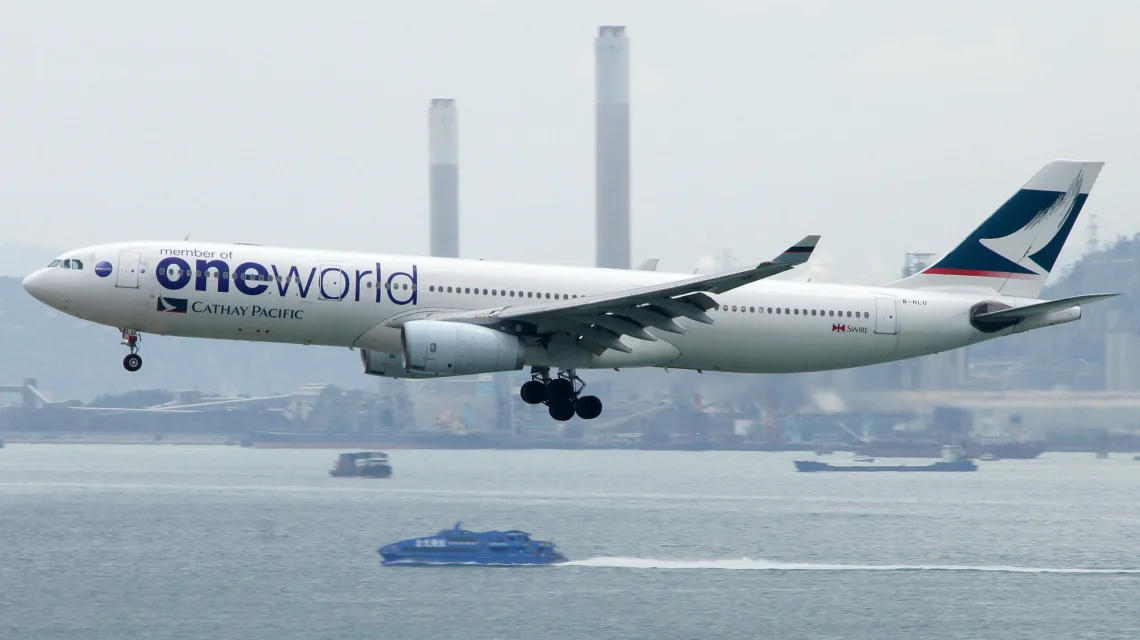
Cathay Pacific has announced plans to launch direct flights between Hong Kong and Almaty, marking a significant step in the airline’s expansion into Central Asia and strengthening Hong Kong’s role as an international aviation hub.
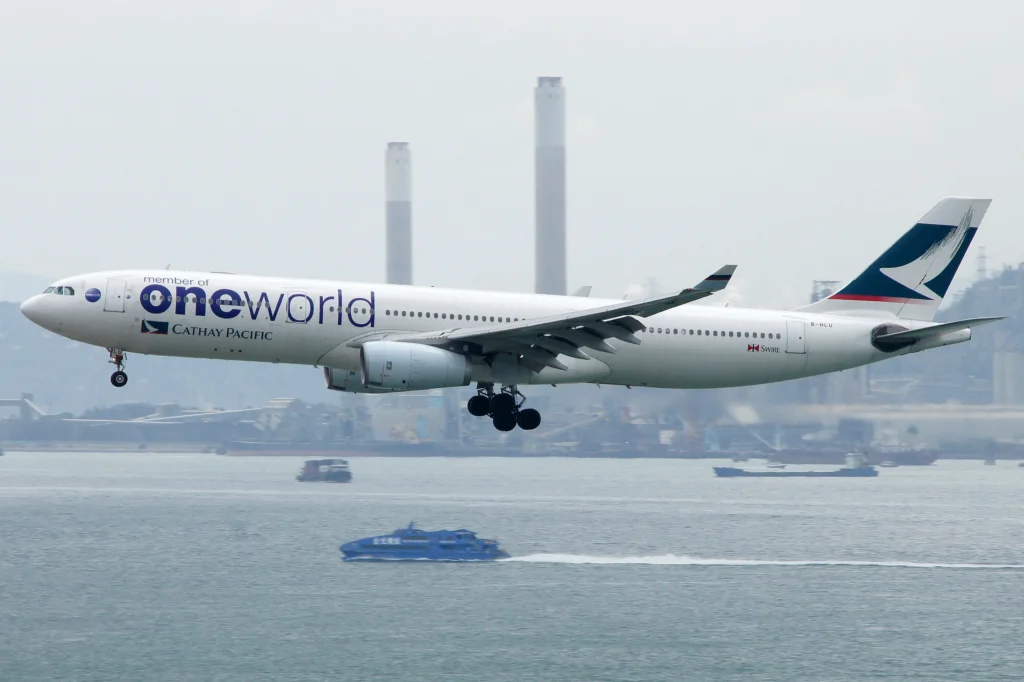
The planned route will connect Hong Kong with Almaty, Kazakhstan’s commercial and cultural capital, with services expected to begin in the first quarter of 2027. Cathay Pacific plans to operate three flights per week using an Airbus A330-300 widebody aircraft, creating what is expected to be the only direct air link between Hong Kong and Kazakhstan.
For travellers, this is more than a route announcement. It opens a new corridor between East Asia and Central Asia, placing one of the region’s most intriguing mountain cities within easier reach of Hong Kong, the Chinese Mainland, and Cathay’s wider global network.
A New Central Asian Chapter For Cathay Pacific
The planned Almaty service marks Cathay Pacific’s first destination in Central Asia, giving the airline a stronger presence along one of the world’s most strategically important travel, trade, and investment corridors.
The announcement came as Cathay Chief Customer and Commercial Officer Lavinia Lau joined a high-level Hong Kong delegation to Central Asia led by HKSAR Chief Executive John Lee Ka-chiu. The visit was focused on exploring new business opportunities between Hong Kong and emerging markets in the region.
Speaking at a ceremony in Almaty alongside representatives from Almaty International Airport and the city’s tourism department, Lau described Central Asia as a strategically important Belt and Road region with strong business potential. She also noted that Cathay’s role as Hong Kong’s home hub carrier aligns with the HKSAR Government’s ambition to strengthen connectivity with emerging markets.
For Cathay, the route builds on recent network momentum. The airline previously launched direct flights to Urumqi in Northwestern China, a city close to Central Asia, extending its reach into mainland and Belt and Road-linked destinations. The proposed Almaty route now takes that strategy further by connecting Hong Kong directly with Kazakhstan.
Why Almaty Matters
Almaty is one of Central Asia’s most compelling cities.
Although Astana is Kazakhstan’s capital, Almaty remains the country’s commercial, cultural, and lifestyle centre. It is a city where modern business districts, Soviet-era architecture, leafy boulevards, cafés, museums, mountain views, and outdoor adventure all meet in a setting that feels different from more familiar Asian city-break destinations.
Kazakhstan is also Central Asia’s most developed economy, with key industries including manufacturing, mining, and industrial production. It is Hong Kong’s largest trading partner and leading export market in the region, making the planned route important not only for leisure travellers but also for business, cargo, investment, and wider economic ties.
This is where the route becomes especially interesting. It is not simply a new flight for holidaymakers. It is a connection designed to support the movement of people, cargo, and capital between Hong Kong and one of Central Asia’s most important economies.

A Destination With Growing Travel Appeal
For travel readers, the Almaty announcement should also place Kazakhstan more firmly on the map.
Almaty sits near the Trans-Ili Alatau mountains, giving the city a dramatic natural backdrop and easy access to outdoor experiences. Visitors can combine urban travel with mountain scenery, hiking, winter sports, lakes, ski areas, and seasonal escapes that feel very different from the tropical or coastal destinations often associated with Asian travel.
The city is also gaining profile as a winter-sports destination. Almaty is set to host the 2029 Asian Winter Games, a major event expected to support the city’s international visibility and tourism development.
That timing matters. A new direct route from Hong Kong in 2027 would give travellers, business visitors, sports organisations, media, and event-related traffic a stronger aviation link ahead of the Games. It also positions Almaty as a destination that could attract more attention from travellers looking for less obvious places to explore.
Hong Kong As A Super-Connector
Cathay Pacific’s planned Almaty flights also support a wider aviation story: Hong Kong’s role as a global connector.
Cathay and HK Express together operate close to 600 return flights per week to 33 Belt and Road destinations, while also operating more than 330 return flights per week between Hong Kong and 24 destinations in the Chinese Mainland, according to the airline’s announcement.
This gives the proposed Almaty route broader significance. Travellers from Kazakhstan would be able to use Hong Kong as a gateway into the Chinese Mainland, Southeast Asia, Japan, South Korea, Australia, and beyond. At the same time, travellers from Hong Kong and other Asian markets would have a more direct way to access Kazakhstan and Central Asia.
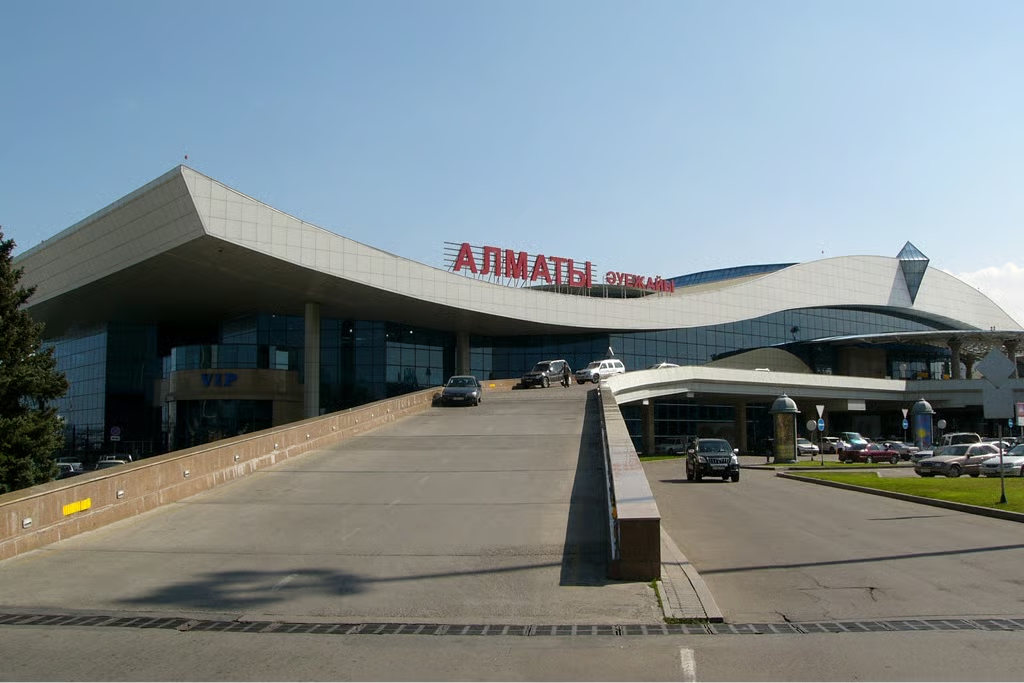
For business travel, that connectivity could prove especially valuable. Kazakhstan’s economy, energy sector, mining activity, manufacturing base, and regional role make it an important market for companies looking at trade, infrastructure, logistics, and cross-border partnerships.
A Route With Both Leisure And Business Potential
The planned Hong Kong–Almaty service is likely to appeal to several types of travellers.
For business travellers, it creates a more efficient route into Kazakhstan’s commercial centre. For cargo and trade, it supports the movement of goods between Hong Kong, China, and Central Asia. For leisure travellers, it introduces a destination that offers mountain scenery, winter activities, culture, food, and a very different travel experience from the region’s better-known tourism hubs.
It may also appeal to adventurous travellers who have already visited major Asian destinations and are looking for somewhere less predictable. Almaty offers that sense of discovery while still being a major city with established visitor infrastructure.
The planned use of an Airbus A330-300 also suggests Cathay sees meaningful demand across passenger and cargo segments. A widebody aircraft gives the route greater capacity and makes it more suitable for a market where trade and tourism are both part of the growth story.
Why Travellers Should Watch Almaty
Almaty is the kind of destination that rewards curiosity.
For culture-focused travellers, the city offers museums, performance venues, markets, architecture, and a strong café and dining scene. For nature lovers, the mountains are the headline attraction. The surrounding landscapes open up opportunities for hiking, skiing, scenic drives, alpine lakes, and seasonal outdoor experiences.
For those interested in Silk Road and Central Asian history, Kazakhstan adds a different dimension to an Asia travel itinerary. It is a destination shaped by nomadic heritage, Soviet history, modern development, regional trade, and a fast-changing urban identity.

That mixture makes Almaty well suited to travel journalism because it is not easily reduced to a single idea. It is a business city, a mountain city, a cultural city, and a gateway into a region that many travellers still know too little about.
A Timely Move Ahead Of Visit And Event Growth
The timing of Cathay Pacific’s planned launch is notable.
With Kazakhstan working to expand its aviation links and Almaty preparing for the 2029 Asian Winter Games, direct connectivity from a major Asian hub could help accelerate international interest in the city. Kazakhstan has also been expanding its broader aviation ambitions, including plans for new direct links with markets such as Tokyo and New York.
For Cathay, this fits into a wider network-building strategy. The airline is reinforcing Hong Kong’s international aviation role while also expanding into emerging markets where business, tourism, and cargo demand are expected to grow.
For travellers, it means Almaty may become much easier to include in multi-destination Asia and Central Asia itineraries from 2027 onwards.
What This Means For Hong Kong And Kazakhstan
The planned route could strengthen ties between Hong Kong and Kazakhstan across several fronts.
Tourism is the most visible part of the story, but the connection may be equally important for trade, conferences, investment, education, cargo, and business mobility. Direct flights reduce travel friction, and lower friction often leads to stronger relationships between markets.
Kazakhstan’s position within Central Asia gives it regional significance, while Hong Kong’s global aviation network gives it reach far beyond one city. The direct route would therefore create a bridge between Central Asia and one of the world’s most connected air hubs.
That is why this announcement matters beyond the aviation sector. It speaks to how travel routes can shape commercial opportunity, cultural exchange, and destination awareness.
Final Thoughts: A New Route That Could Put Almaty On More Travel Lists
Cathay Pacific’s planned direct flights to Almaty represent a meaningful addition to the airline’s network and a strong signal of Central Asia’s growing importance.
For Hong Kong, the route reinforces its role as a super-connector between the Chinese Mainland, Asia, and emerging global markets. For Kazakhstan, it provides a direct link to one of Asia’s most important international aviation hubs. For travellers, it opens the door to a destination that combines mountain landscapes, urban culture, commercial energy, winter sports, and Central Asian character.
Almaty may not yet be as familiar to many leisure travellers as Bangkok, Tokyo, Seoul, or Singapore, but that is exactly what makes it interesting. With direct Cathay Pacific flights planned for 2027 and the Asian Winter Games approaching in 2029, the city is likely to attract more attention in the years ahead.
For Jolly Holi readers looking for the next destination to watch, Almaty is now firmly on the radar.
 Vietnam Airlines New Destination: Nonstop Hanoi–Amsterdam Service
  No Layovers, No Limits: Cathay Pacific’s New Hong Kong–Seattle Route
  Direct Flights to Melbourne Take Off with a Sweet Perk
  The Route You’ve Waited For: Cathay Pacific Launches Direct Flights to Munich
