
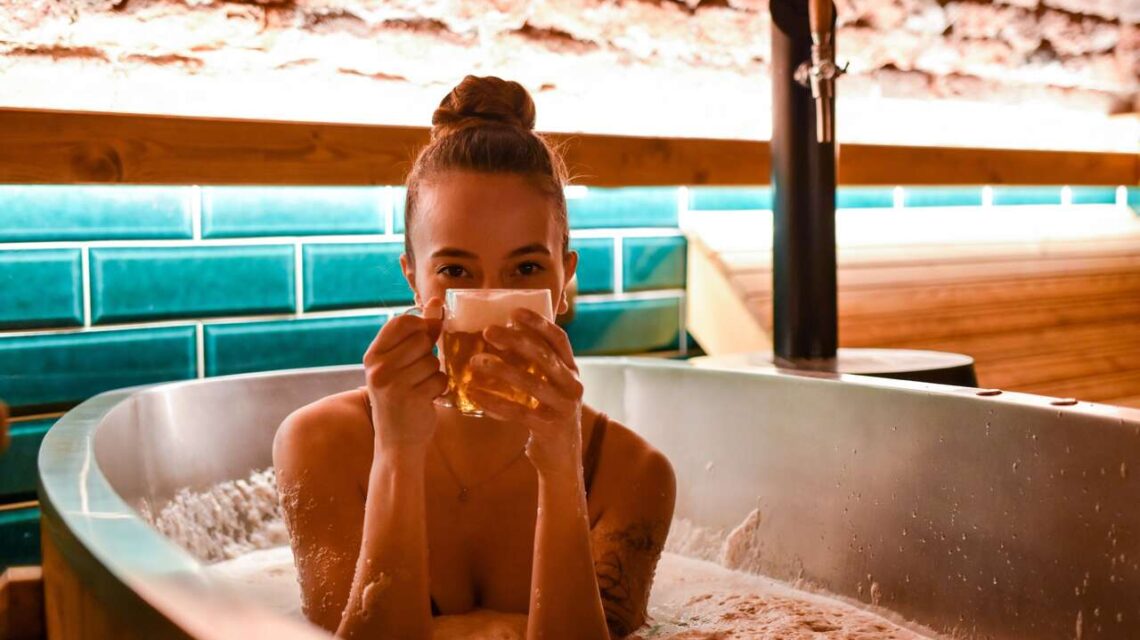
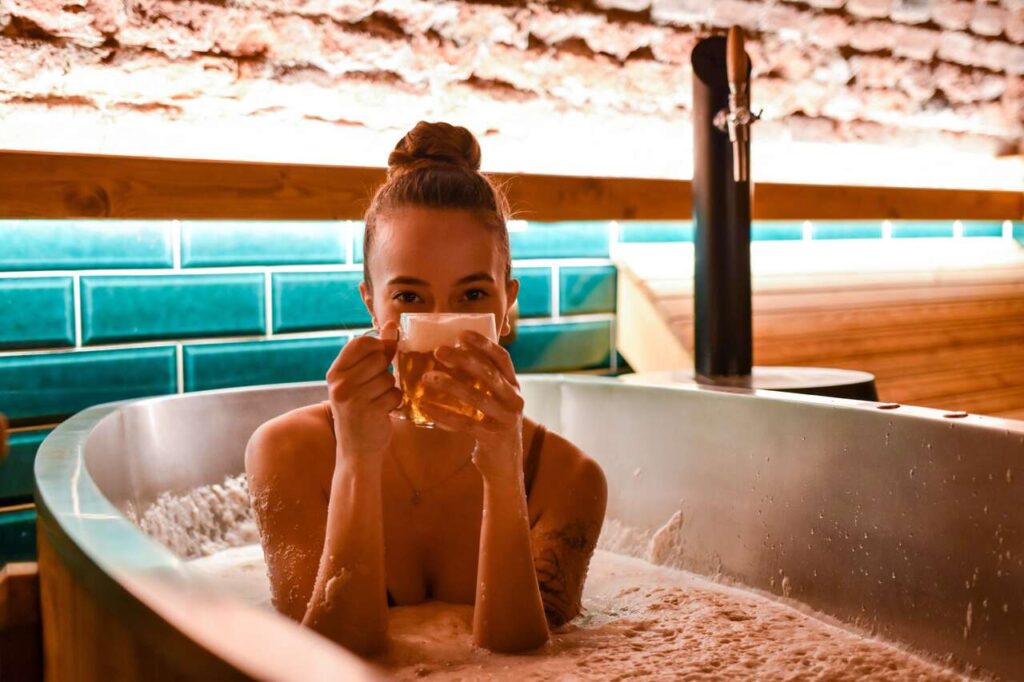
In an era where wellness trends oscillate between the archaic and the avant-garde, the Czech Republic has pioneered a paradox, spas that marinate patrons in alcohol. This is not Bacchanalian indulgence repackaged for Instagram, but a practice rooted in biochemical science.
Historical Precedents Meet Modern Metrics
The resurgence of alcohol-based hydrotherapy traces to October 2022, when Prague’s Pivni Lázně Beer Spa hotel reopened with whiskey-barrel tubs and a proprietary blend of dark ale and organic hops. This trend’s lineage extends to 13th-century Bohemian monasteries, where monks prescribed fermented baths for humoral balance.
Bookings for alcohol-infused spas have surged according to the Czech Tourism Board, driven by luxury travelers seeking alternative and novel rejuvenation methods.
The Biochemistry of Bathing in Spirits
Dr. Eliška Nováková’s peer-reviewed study in dermatological therapeutics mentions that ethanol’s enhances antioxidant absorption—notably the resveratrol in red wine baths. While tannins in oak-aged spirits claim to improve micro-circulation.
Luxury Redefined: From Champagne to Absinthe
Karlovy Vary’s Grand Spa Resort epitomizes opulence with its Champagne Hydrotherapy. a 75% Chardonnay and 25% Pinot Noir blend heated to 38°C, followed by a post-soak tasting at €500 per session. Meanwhile, Brno’s Absinthe Mist Room utilizes essential oil diffusers. 68% of participants reported euphoric relaxation. These offerings cater not only to hedonists, but also to solitary seekers of clinical-grade immersion.
Some critics dismiss alcohol spas as gimmicks, yet their DNA is very Czech. The nation’s 19th-century beer baths in Třeboň were communal rituals, today’s it’s been modernised into self-care. This is not only an indulgence it is cultural evolution, measured by the litre.
We urge JollyHoli readers to document their responses and separate fact from folklore.
 Discover the World’s Largest Indoor Ski Resort in Shenzhen
